International talent is an opportunity if you get the process right
For employers in the Maastricht Region, recruiting internationally can open the door to a much larger pool of employee talent. However, recruiting candidates from outside the Netherlands is about much more than arranging a residence permit.
That is where Expat Management Group, an Expert Partner of Expat Centre Maastricht Region, comes in. The company supports employers with immigration, compliance and relocation, helping international employees through the different stages of their move. For co-founder Dominique Coenen and Immigration Manager Lonneke Kerpershoek, there is also a personal connection to the region. Coenen was born and raised in Zuid-Limburg, while Kerpershoek grew up in Landgraaf. Both studied at Maastricht University before starting their careers in immigration in Brussels. Their own experiences of moving outside the Netherlands showed them that even a short move across a border can bring unexpected challenges. Today, this experience helps shape how they advise employers and the internationals these employers recruit and potentially retain.

Looking at the whole journey
Expat Management Group describes itself as a mobility consultancy, combining immigration expertise with practical relocation support. Its approach is to look beyond simply obtaining a permit.
‘We focus a lot on compliance, but also on retention,’ says Kerpershoek. She advises employers to seek advice before making an offer to an international candidate. The salary, the proposed start date and immigration requirements should all be checked before any placement begins. ‘If things are not in order, the consequences are real. Permits can be withdrawn, fines can be imposed, and ultimately the recognised sponsor status itself can be withdrawn.’
This is particularly important for employers that are Immigration and Naturalisation Service (IND) recognised sponsors. This status can make recruiting highly skilled migrants from outside the European Union (EU) quicker and easier, but it also brings responsibilities. Kerpershoek explains that employers need to translate IND requirements into their everyday HR processes. They need to know who is responsible for compliance and what happens when an employee's circumstances change.
‘Don’t assume that your role in an international employee’s journey stops when the employee arrives in the Netherlands,’ adds Kerpershoek. ‘The main challenge or potential challenges start after the start date of the employment contract.’
This is where ongoing support becomes important. ‘Our work is not just about obtaining permits. We help recognised sponsors get their processes in order and keep them that way, so that their sponsor status stays safeguarded and they can pass an audit at any time,’ says Coenen. ‘We have sat in on IND audits alongside our clients many times, so we know what is asked.’ Coenen encourages employers not to focus only on the process of getting an international employee into the Netherlands. Compliance continues throughout the employee's time with the organisation. Salary deductions, extended sick leave or unpaid leave, for example, can have consequences for an employee’s immigration status.
Expert knowledge and a regional network
Expat Management Group sees Expat Centre Maastricht Region as an important link in the international employee's journey. Coenen values the way expat centres across the Netherlands bring municipalities, immigration services, employers and specialist partners together.
Becoming an Expert Partner also provides Expat Management Group an opportunity to share knowledge with employers and learn about the challenges they face. This is particularly relevant in the Maastricht Region, where cross-border working with Belgium and Germany adds another dimension to international employment.
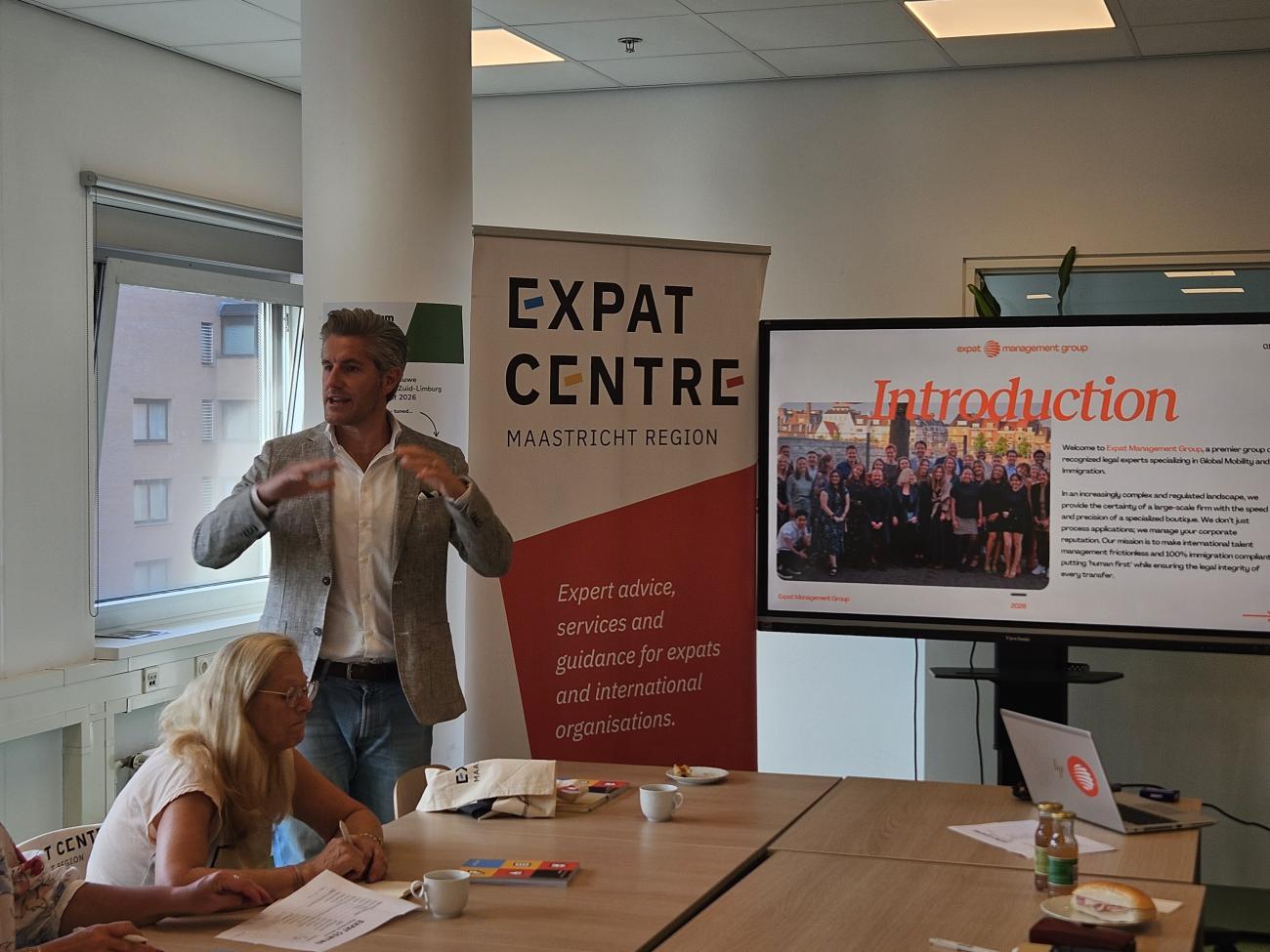
‘We work in the Netherlands, Belgium and Germany, so our advice does not stop at the border,’ says Coenen.
The partnership also supports the international employee after arrival. Coenen describes Expat Centre Maastricht Region as ‘a beacon’ where internationals can return for information and connect with their new community.
A good start supports retention
Housing is currently one of the biggest challenges for newcomers, according to Kerpershoek. Employers should therefore be realistic with candidates about housing costs, availability and where they may be able to live. Managing expectations from the beginning can make a major difference to retention. ‘The first couple of months after arrival are very important,’ says Kerpershoek. A stressful start can affect whether someone settles successfully and remains with their employer.
Coenen's final advice is simple: employers struggling to fill vacancies should not be afraid to look internationally. ‘There is opportunity if you know where to go to, if you build your processes correctly,’ he says. Opening recruitment to international candidates can make an employer's ‘fishing pond’ considerably bigger.